


Published on: 11/06/2026


Description
AUGUSTA, Ga. - Georgia once courted data centers as the future. Now, they’re the fight.
In the same election that ushered in a national wave of Democrats promising to crack down on AI and data centers, Georgia voters put two key levers of power into the hands of skeptics:
- Gov.‑elect Keisha Lance Bottoms.
- A new Democratic majority on the Georgia Public Service Commission.
They’re stepping into an economy where server farms are already in the works — from a Google complex planned near I‑20 in Columbia County to a massive QTS facility along Gordon Highway in Augusta.
A governor-elect who wants to hit ‘pause’
On the campaign trail, Bottoms did something relatively few Southern governors have dared: she promised to slow down data center construction, not speed it up.
She has said she’ll sign an executive order imposing a temporary moratorium on new data center approvals. The pause that could last from a month to six months or longer while her administration studies next steps.
Georgia, she says, is one of the top data center states in the country, powered by generous tax breaks and eager economic development offices.
That buildout, she argues, is now straining the electric grid, nudging utility bills higher, and sparking questions about water use.
She wants to:
- Pull together consumers, industry representatives and community leaders.
- Comb through state and local tax incentive deals that locked in fast growth.
- Write clearer rules so that any future projects have to meet standards on energy, location and community protections.
In many ways, it mirrors what’s happening nationwide: newly empowered Democrats in data-center-heavy states promising moratoriums, tougher disclosure requirements, and guarantees that ratepayers won’t be stuck subsidizing infrastructure for the AI gold rush.
In Georgia, those promises are colliding with projects already under construction.
A boom that’s already here
Drive west from Augusta, and the scale of Georgia’s data center era is unmistakable.
Near Appling‑Harlem Road in Columbia County, land is being prepared for a huge Google data center, a sprawling complex of servers and cooling equipment that will eventually pump millions of dollars into the local tax digest — and pull megawatts of power from the grid. Another large data center is planned in the Pumpkin Center area near Harlem.
In McDuffie County, plans are in the works for a 200‑acre campus off Randall Hunt Road in Thomson, with room for up to six buildings and a buildout that could run into the next decade.
In south Augusta, a developer wants to rezone roughly 383 acres near Four H Club Road and Mike Padgett Highway for a seven‑building project called the Nixon Technology Campus.
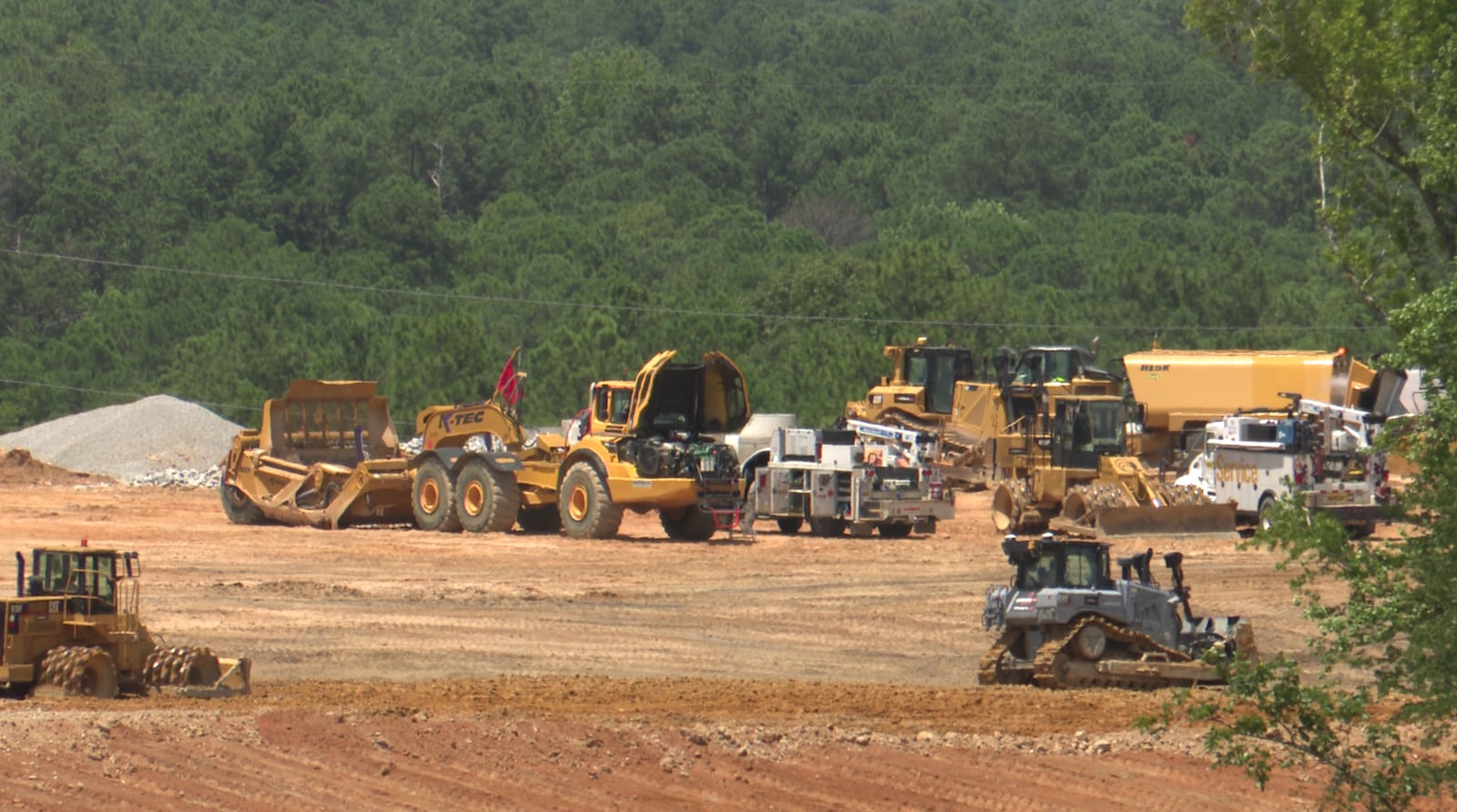
And then there’s QTS in Augusta — a massive facility rising along Gordon Highway next to the Hayne’s Station subdivision.
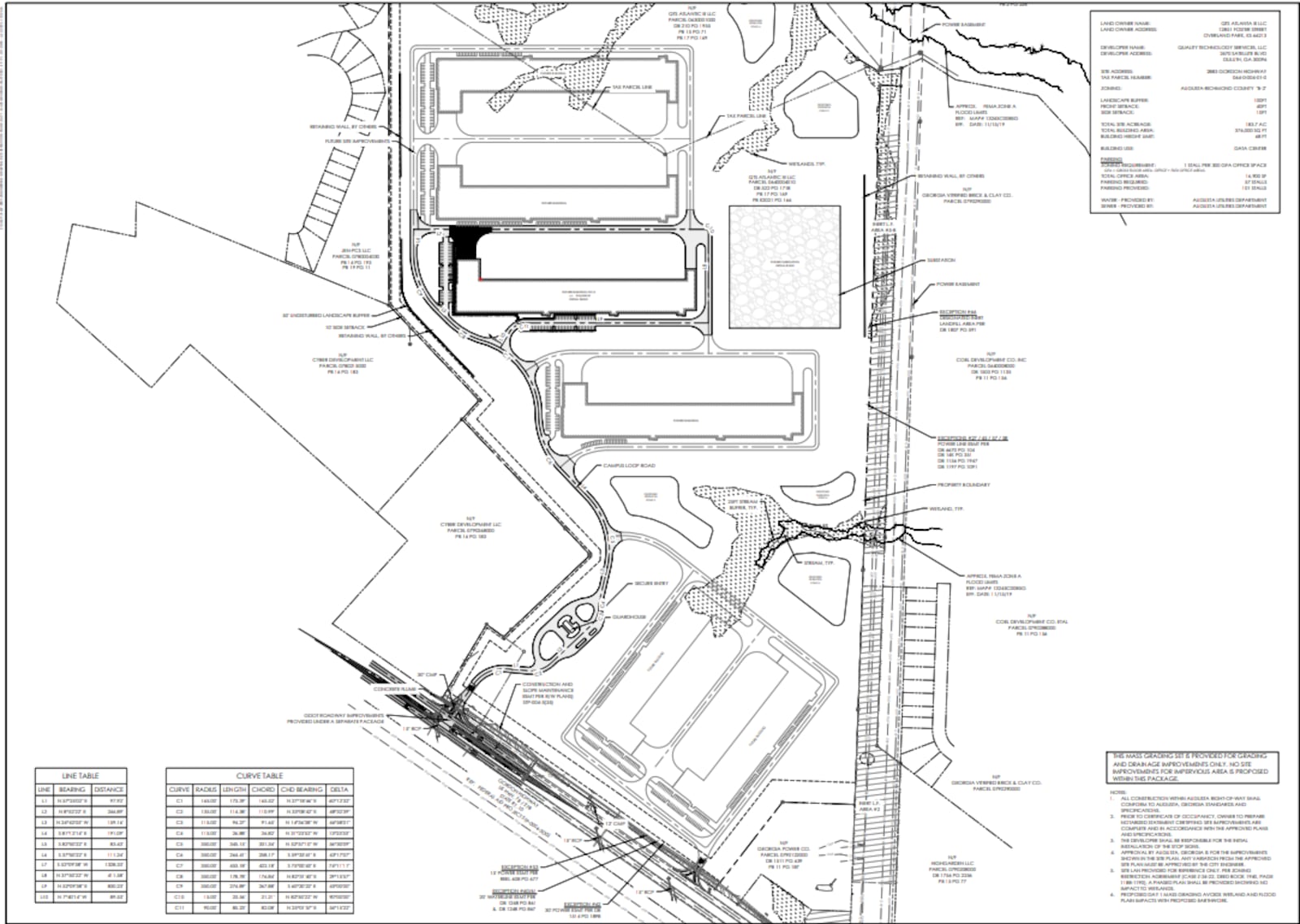
The company won its zoning approvals before local officials ever hit the brakes, meaning Augusta’s later moratorium and new rules cannot be applied retroactively.
Bottoms’ promised moratorium can’t unwind any of that.
Her pause would mostly affect what comes next — the next round of rezoning requests, the next round of tax deals, the next round of industrial land quietly marketed to tech firms.
That tension between what’s already in the pipeline and what the state now wants to slow is exactly what’s playing out in Augusta’s politics.
Augusta learns in real time what a data center fight looks like
On a recent Tuesday, Augusta commissioners filed into a meeting knowing two things: residents living near data center sites wanted stronger safeguards, and the city’s temporary moratorium on new applications was about to expire.
After weeks of neighborhood meetings, legal memos and late‑night revisions, they had a 29‑page proposed ordinance — Augusta’s first real attempt to say where data centers can be built, how loud they can be, how far they must sit from homes and farms, and how they use water.
Commissioners spent nearly two hours wrestling over whether those rules were ready.
On a 6–5 split, commissioners approved the ordinance while acknowledging that many of the toughest ideas they’d just discussed weren’t actually in it.
And to some residents’ disappointment, the rules don’t apply to the Nixon or QTS data centers because planning was already underway.
For residents like Zakiya Mabery, who has helped lead opposition from the Haynes Station neighborhood, the vote felt rushed. She had called for at least a 150‑day extension, warning that communities still didn’t fully understand how buffers, noise protections and decommissioning would work, or what “overlay districts” and grandfathering really meant.
In the end, Augusta landed where many communities do: some rules, many worries and little consensus on how much is enough.
Power bills, politics and the Public Service Commission
If Augusta is wrestling with the neighborhood‑level impacts of data centers, the Georgia Public Service Commission is looking at who pays.
For the first time in three decades, Democrats will hold a 3–2 majority on the PSC after a pair of elections dominated by one theme: Georgia Power bills that many voters say they can’t afford.
Commissioner‑elect Shelia Edwards says she heard the same thing at every campaign stop: “The utility bill is too damn high.”
Environmental groups, led by the Georgia Conservation Voters Action Fund, poured more than $4 million into the PSC races, tying those kitchen‑table anxieties directly to the rapid growth of massive “large load” customers like data centers.
Their argument was blunt: Georgia homeowners shouldn’t be subsidizing the infrastructure to feed an industry whose profits flow to Silicon Valley and beyond.
Georgia Power insists that isn’t happening. The utility points to contracts and rules negotiated with the PSC that, it says, make sure data centers pay their own way.
But even the outgoing commission members have recognized the issue deserves a closer look. The panel has already ordered an independent review of the way Georgia Power bills data centers.
When the new Democratic majority is sworn in, it has signaled plans to go further — opening an “affordability docket” that would explicitly define what households can reasonably pay and revisit how the costs of serving data centers are allocated.
That work will unfold alongside Bottoms’ promised moratorium.
Georgia’s choice: How much AI can the grid — and voters — bear?
Nationally, AP reports roughly three‑quarters of American voters say they don’t want a data center built in their own community. Yet the same polling suggests that for most people, data centers still rank below corruption and the cost of living as decisive voting issues.
In Georgia, those forces are beginning to converge.
The state’s economic development agencies have sold data centers as quiet neighbors and steady tax engines. Local leaders have celebrated the jobs they bring during construction and, in some cases, the long‑term tech work they promise.
And in Columbia County, officials have said data center deals could ease or eliminate property taxes.
For now, existing projects like Google and QTS will move ahead under the deals already in place.
The bigger test will be what happens when the next wave of tech companies comes knocking.
Copyright 2026 WRDW/WAGT. All rights reserved.
News Source : https://www.walb.com/2026/11/06/election-may-bring-reckoning-data-centers-georgia/
Other Related News
11/06/2026
LEE COUNTY Ga WALB After enduring roughly 20 heart procedures and an open-heart surgery f...
11/06/2026
WASHINGTON AP President Donald Trump on Thursday signed a proclamation that he says will ...

11/06/2026
AP - Production of Teslas Cybertruck a stainless-steel electric vehicle with a polarizing ...
11/06/2026
MOULTRIE Ga WALB Newly released records show that the Colquitt County School District pai...
11/06/2026
LOWNDES COUNTY Ga WALB - Two South Georgia Winn-Dixie stores are expected to get a new nam...

Follow

Download Our App


Copyright 2022 © Albany Metro Community. All Rights Reserved