


Published on: 03/04/2026


Description
ATLANTA, Ga. (Atlanta News First) - For the second year in a row, Georgia lawmakers are on the verge of passing legislation that would overhaul how the state addresses reading instruction in its public schools, with bipartisan support and backing from the wife of Georgia’s House Speaker.
The proposed Georgia Early Literacy Act of 2026 passed the House and is moving through the General Assembly. According to national assessments, only one in three Georgia fourth graders can read proficiently.
If passed, the legislation would fund a literacy coach in every elementary school in the state, a role designed to help train teachers in literacy instruction. It would also require children to attend kindergarten before first grade and allow schools to more easily hold first graders back if they are not reading on grade level.
Rep. Chris Erwin, R-Homer, and chairman of the House Education Committee, called the bill “the most meaningful and impactful education legislation the General Assembly has championed since the Hope scholarship in 1992.”
State Sen. RaShaun Kemp, D-Atlanta, said stakes are too high to delay action. “This bill is critically important,” he said. “We have to continue to build on the work that we’ve put forward to make sure our kids are reading. When you have only one out of three kids reading on grade level, that’s a crisis.”
The speaker’s wife and the push for change
Georgia House Speaker Jon Burns, R-Newington, credited his wife, Dayle Burns, a former teacher and elementary school principal in Effingham County near Savannah, as a driving force behind the legislation.
“We would not be here today without the passion and commitment from my wife, Dayle,” Burns said at a news conference last month, adding she helped him understand the problem’s depth.
“She pointed out the obvious that we’ve neglected our future, and that’s our young people,” Burns said. “We’re in a place in literacy that, she recognized and through her insight as a former educator and as we met with legislators from around the country, but especially from the South, that this is a problem.”
Jon and Dayle Burns have been married for nearly 50 years. While Dayle Burns said she prefers to stay on the sidelines, literacy is an issue she knows well. “This is the one thing I know,” she said. “[Jon Burns] can talk about roads and pipelines. This is just my thing.”
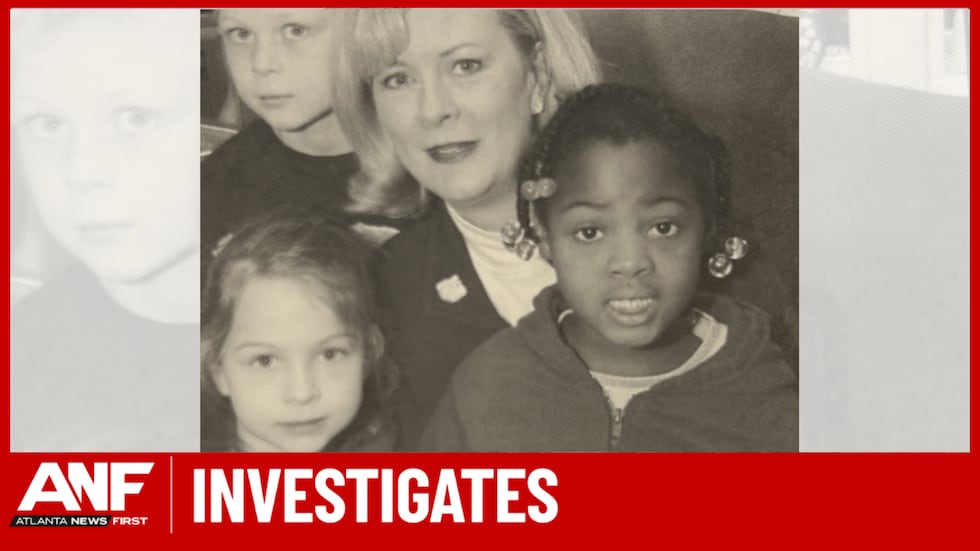
Dayle Burns said the bill is not intended primarily as a retention measure. “It’s about readiness,” she said, “and helping children to be really ready for first grade is monumentally important.”
Reading scores and teacher preparation
Testing results released by the National Assessment of Educational Progress show that since 1998, Georgia’s fourth grade reading scores have never reached the proficiency benchmark.
Dayle Burns said the problem is not the fault of teachers, but of how they have been trained, and cited this analogy: “There have been medicines we’ve given children before, in the past, that doctors have then ended up not being the exact right way to treat a child,” she said. “In today’s world, our children are different, and because of the science of reading knowledge, we have new ways to teach reading.”
A 2023 study published by the National Council on Teacher Quality gave eight Georgia colleges and universities a failing grade in preparing future reading teachers for the classroom. Every university contacted by Atlanta News First Investigates dismissed the council’s findings.
Burns said the state’s university system has a role to play in fixing the problem.
“We need to make sure we’re clear on this; there are many school systems in our state that have an excellent record with teaching young people to read,” he said. “But what we found is we were not providing our teachers with the resources they needed. We don’t have a consistent process of educating our teachers when they come to our university system. Those are some of the things we discovered that were very fixable.”
Burns said lawmakers will adjust Georgia’s existing K-12 school funding formula to provide additional funding to local school districts to pay for the literacy coaches.
The legislation moved quickly after it was introduced in early February, drawing support from both parties.
Dayle Burns said improvement may not come immediately. “There could even be a little dip because until everybody gets on board, parents, grandparents, childcare workers, teachers, until we all get on the same page, you may not see the gains,” she said.
Burns said he expects results sooner rather than later. “We can make a difference, and it’ll be very much sooner than later, because it’s time,” he said.
Parent group supports bill but wants more
A Georgia parent advocacy group said the legislation is a step forward but falls short in several areas, particularly for students with dyslexia.
In a document distributed to legislators, Decoding Dyslexia Georgia called the literacy coach funding “a major step forward” but said the bill’s success will depend on the quality of coach training. The group said fewer than 6% of Georgia educators currently hold a dyslexia endorsement and called on lawmakers to require literacy coaches to obtain one.
The group also urged lawmakers not to wait until to monitor or require compliance from teacher preparation programs, and called for all university teacher prep programs to include the dyslexia endorsement in undergraduate coursework.
Among other concerns, the group said the bill’s first-grade retention provisions should be delayed until reading instruction and intervention in schools have substantially improved. It also called for expanding literacy screening, intervention, and services to middle and high school students, noting that only 31% of Georgia eighth graders read at or above proficiency.
The group said districts have experienced implementation problems under the existing Georgia Early Literacy and Dyslexia Act, including failures to provide proper literacy screenings and interventions, and called for an independent ombudsman or neutral party to oversee implementation of the law.
Reading Reset: An Atlanta News First investigation
Some of the changes in Georgia’s approach to literacy have been inspired by Atlanta News First Investigates’ series, Reading Reset, which examined potential causes of the state’s literacy crisis and possible solutions.
The series documented the experiences of Georgia families whose children struggled to read after being enrolled in a program called Reading Recovery, a one-on-one intervention for the lowest-performing first graders.
A 13-year study by the University of Delaware found the program can be harmful to children in the long term, with students who received Reading Recovery performing worse than peers by third and fourth grade.
The series also examined a pending lawsuit against Heinemann Publishing, which alleged the company sold “defective” reading curriculum to school districts for decades, failing to include adequate phonics instruction. According to district records, Gwinnett County Schools paid Heinemann more than $9 million for instructional materials since at least 2018.
In another installment, the series drew a connection between low literacy rates and incarceration, citing a U.S. Department of Justice report from 30 years ago that concluded reading failure is “mostly likely a cause, not just a correlate” of delinquent behavior. Georgia locks up 968 people per 100,000. the highest rate in the nation, according to the Prison Policy Initiative.
The series also highlighted Mississippi as a model for reform. After passing sweeping literacy legislation in 2013 — including hiring literacy coaches, retraining teachers in science-based reading instruction, and requiring third graders to read at grade level before promotion — Mississippi climbed from 49th in the nation in fourth grade reading scores to 9th.

Another story documented Georgia lawmakers passing legislation to ban “three cueing,” a reading method that relies on prediction and context rather than phonics. That bill passed the House 168-0 and was signed into law by Gov. Brian Kemp.
If there’s something you would like Atlanta News First Investigates to dig into, fill out this submission form.
Atlanta News First podcasts are available now on: Spotify | Apple Podcasts | Amazon Music | YouTube
Download our Atlanta News First app for your latest news and information.
Copyright 2026 WANF. All rights reserved.
News Source : https://www.walb.com/2026/03/04/this-is-my-thing-house-speakers-wife-spurs-georgias-huge-reading-reform/
Other Related News
03/04/2026
WINDER Ga Atlanta News First Colin Gray may be facing a long prison sentence but his son ...
03/04/2026
ATLANTA Ga WALB - State officials have announced today March 3 that a Georgia candy compan...
03/04/2026
WALB is working to produce a video for this story In the meantime we encourage you to watc...
03/04/2026
WALB is working to produce a video for this story In the meantime we encourage you to watc...
03/04/2026
WALB is working to produce a video for this story In the meantime we encourage you to watc...

Follow

Download Our App


Copyright 2022 © Albany Metro Community. All Rights Reserved