


Published on: 09/03/2026


Description
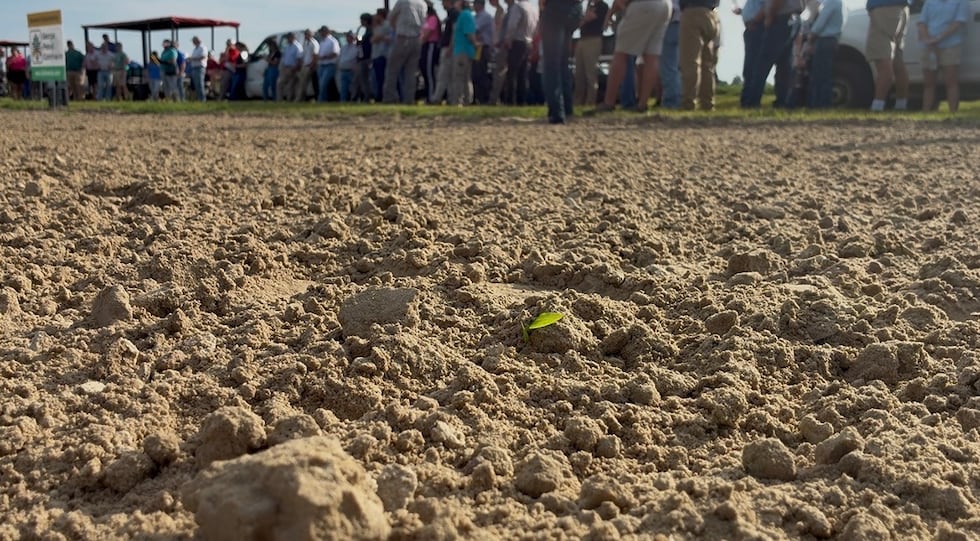
TIFTON, Ga. (WALB) — With cotton harvest just weeks away, South Georgia growers packed into the University of Georgia’s Lang Farm on Wednesday, Sept. 2, hoping to draw last-minute guidance that could protect their crop’s bottom line.
The annual Cotton and Peanut Research Field Day, hosted by the Georgia Cotton Commission, Georgia Peanut Commission and UGA Extension, gave farmers, researchers and industry leaders a firsthand look at the research shaping both peanut and cotton crops heading into harvest.
A mixed year for cotton
John Harrell, a Grady County farmer who has worked his family’s land since 1975, grows both peanuts and cotton. He said 2026 has been a season of extremes, depending on location.
“A lot of my neighbors, different parts of the county and neighboring counties, have gotten really regular rainfall, and it’s really moved the crops along,” Harrell said. “We’ve just been in a dry spot.”
Harrell said the timing of rainfall matters as much as the amount, particularly for dryland cotton that isn’t irrigated.
“When you don’t have rain at the right times... the crop just stops,” he said. “It takes rain for it to kind of start over again, especially cotton.”
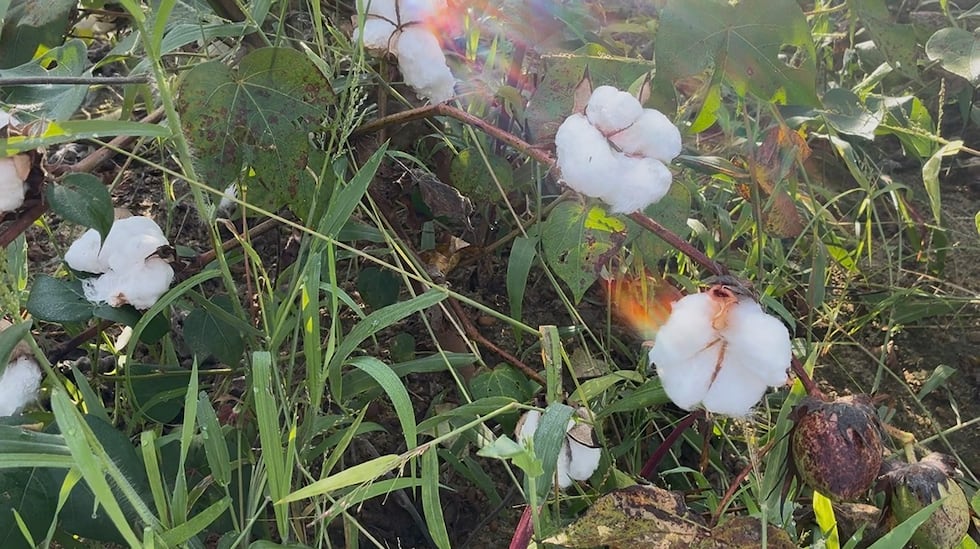
Harrell said cotton’s blooming window is closing fast.
“We’re running out of time on cotton—probably the 6th to the 12th of September is the last bloom you’ll see that has the possibility of making a boll that would stay in the picker,” he said. “You just run out of time in the fall.”
Pests add pressure
Harrell said this year brought new insect concerns after leafhoppers caught cotton farmers off guard in 2025.
“Last year, it hit us late in the season. Nobody knew anything, and the numbers were just overwhelming,” Harrell said. “We tried different products before they realized which ones worked.”
This year, he said, leafhopper numbers have stayed manageable, something he credits to a harder winter further south in Florida. But whiteflies have moved in.
“Whiteflies, especially here in Tift County... they grow a lot of vegetables, and that’s what they’re really attracted to, but they will get in cotton,” Harrell said. “If you don’t get them under control, they can mess the cotton up.”
Harrell said he has sprayed just once for whiteflies this year and is hoping that’s enough.
“Thanks to the Extension Service, we’re very cautious on what we spray now, because it can trigger other outbreaks,” he said.
Research aimed at the bottom line
Researchers test crop varieties and chemical products at different application rates, he said, information that helps farmers avoid overspending in a year when profit margins are tight.
“Profitability on the farm is pretty slim,” Harrell said. “After COVID, everything went up on the farm—It’s never really come down a whole lot. It’s come down some, and our prices dropped. So it’s just been a double-whammy. But farmers are optimistic. We’re hoping for better times.”
He pointed to research on white mold management as an example of guidance that saved him money this year.
“They really stressed that if you’re putting out a fungicide for white mold, you either got to water it in or you got to have timely rainfall,” Harrell said. “That saved us a lot of money, because on my dryland crops, I didn’t use the more expensive product—It was not going to get in the soil to do any good.”
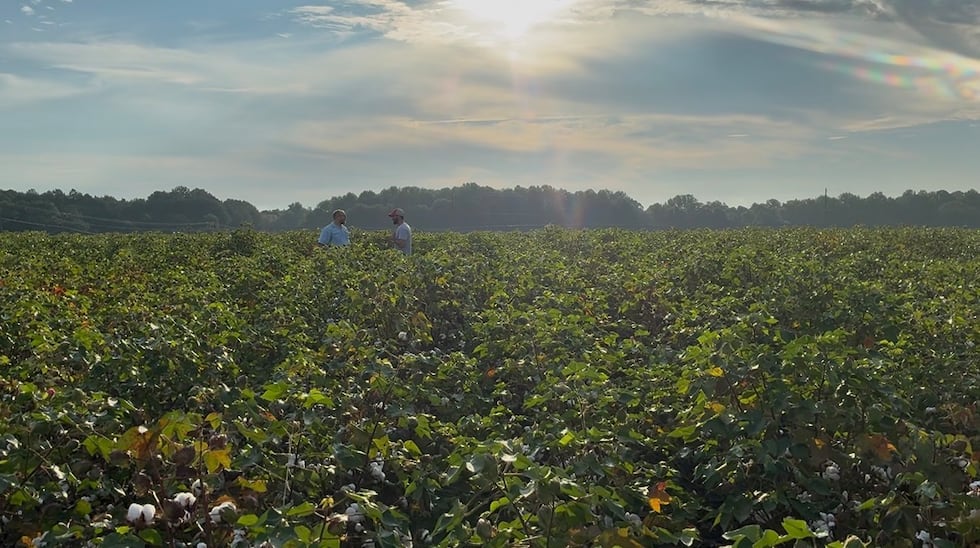
Harrell said white mold shows up in cotton but does its worst damage in peanuts.
“If you don’t get it under control, when you go to dig those peanuts, up to half the crop could be gone,” he said.
He credited the Georgia Cotton Commission, Georgia Peanut Commission and UGA Extension for bringing that research directly to farmers—research funded largely through growers’ own checkoff dollars.
“Without the Georgia Extension Service and the Peanut Commission and the Georgia Cotton Commission, the farmers actually are funding these projects with their checkoff money,” Harrell said. “They bring that valuable information to us.”
Camp Hand, an extension cotton specialist, said his research spans the entire growing season, from planting equipment and stand establishment to variety selection, growth management and harvest-aid applications.
“This is [farmers’] money being invested in the future of the cotton and peanut industries in South Georgia,” he said.
Staying ahead of disease and insects
Scott Monfort, UGA Extension peanut agronomist, said the field day is designed to connect growers directly with the research their checkoff dollars support, covering everything from variety selection to disease, insect and weed management.
“We’re doing a lot of work in both cotton and peanut to try to continue to stay ahead of any potential issues and build recommendations that growers can implement on their farm to hopefully keep them sustainable,” Monfort said. “That’s our main game here—to make sure that we are good stewards of the money that they provide us to do the research.”
Monfort said both crops are nearing maturity, but growers can’t let up yet. Because planting stretched across a two-and-a-half-month window, some fields still need irrigation even as others are ready to be cut off.
“We’re getting ready to harvest, but we’re trying to make sure that the growers know we can’t give up on the latter part of this crop so that we can have a good crop all the way through,” Monfort said.
He also flagged rising concern over leaf spot, a fungal disease that can strip peanut plants of the leaves they need for photosynthesis.
“Leaf spot disease is coming in strong now in some areas,” Monfort said. “We want to make sure that growers are well aware of that, that they make sure they’re scouting their crop... so that they can change their fungicides as they need to, to try to manage that before it puts them in a situation that we’ve got to harvest early.”
Monfort said growers typically begin spraying fungicide around 45 days into the season and continue on a 14-day schedule through about 120 days, adjusting the mix or tightening the interval to as little as 12 days if scouting turns up problems.
“If you don’t know what you have, we can’t make a viable recommendation for you to help manage it,” he said.
Georgia leads the nation in peanut production, and the state’s cotton and peanut industries remain central to South Georgia’s economy. But growers are also exposed to global market pressures—the state exports roughly a quarter of its peanut crop, and trade conditions directly affect the prices farmers receive.
“Cotton is good for Georgia agriculture,” Hand said. “The last couple of years have been really, really hard on the cotton industry ... we’ve got to keep planting cotton to keep our gins running, but then keeping the gins running keeps trucks moving...”
Field days like Wednesday’s are meant to help close the gap between research and the field, giving growers tools to manage costs and protect yields in a year when margins are thin.
The event began with morning field tours at the UGA Lang Farm before moving to the UGA Tifton Campus Conference Center for an educational program.
Have a news tip or see an error that needs correction? Let us know. Please include the article’s headline in your message.
To stay up to date on all the latest news as it develops, follow WALB on Facebook, TikTok, Instagram, and X. For more south Georgia news, download the WALB News app and add WALB as a preferred source on Google.
Copyright 2026 WALB. All rights reserved.
News Source : https://www.walb.com/2026/09/02/cotton-farmers-south-ga-race-clock-save-slower-season/
Other Related News
09/03/2026
ATLANTA Ga Atlanta News First A massive manhunt concluded after the man accused of killin...
09/02/2026
TIFTON Ga WALB UPDATE 615 PM The Tift County Board of Education has voted to terminate th...
09/02/2026
DOTHAN Ala WTVY - A day after Florida banned Flock cameras along state highways Alabama ma...
09/02/2026
COFFEE COUNTY Ga WALB A deadly crash is under investigation in the Douglas area after the...
09/02/2026
ATLANTA Ga Atlanta News First A Georgia Department of Corrections GDC special agent was a...

Follow

Download Our App


Copyright 2022 © Albany Metro Community. All Rights Reserved