


Published on: 08/21/2026


Description
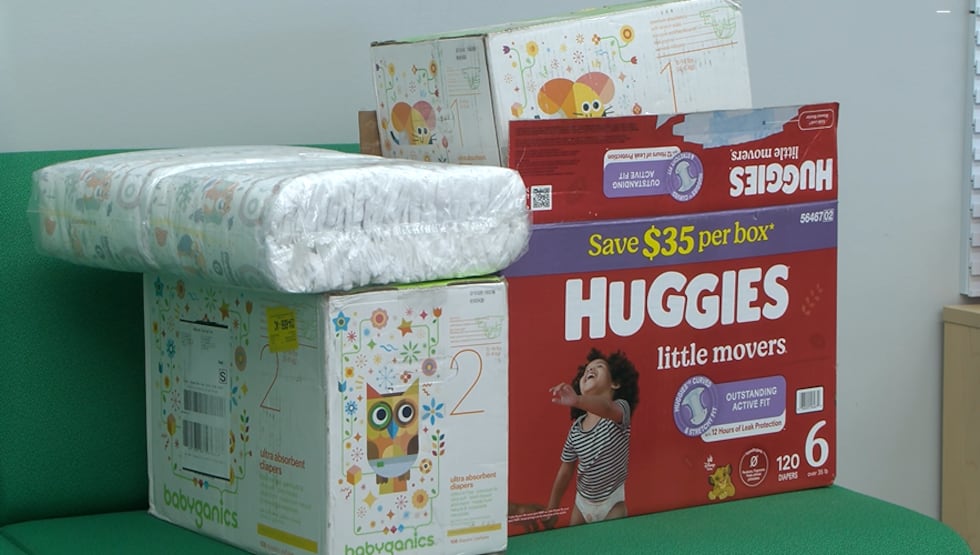
ALBANY, Ga. (WALB) — A controlled pilot study conducted by Helping Mamas in Albany found that 99.2 percent of participating families were already enrolled in public assistance programs and still could not meet their children’s basic diaper needs, revealing just how deep diaper insecurity runs among local families in the community.
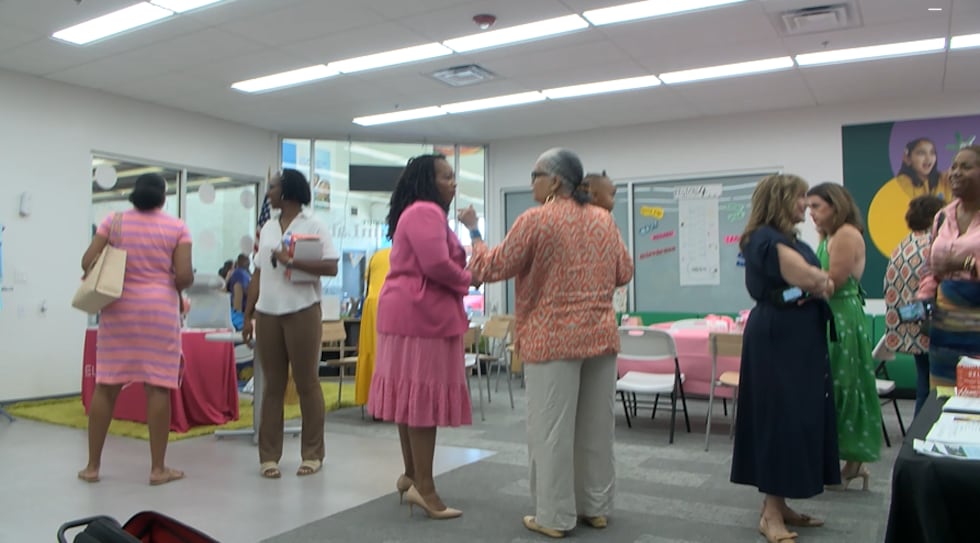
The study, which began in 2024, divided Dougherty County participants into two groups based on the level of diaper support they received, then surveyed them before and after the assistance period. One group received 50 diapers total. The other received 300 diapers a month for three months. The non-profit organization revealed the survey results in a community briefing on Thursday, Aug. 20.
Survey results sounds the alarm for Albany residents
The results show access to diapers alone can shift a family’s stability. Families who received the larger, sustained supply saw their parenting confidence increase by 19.9 points. Those given the smaller amount saw their confidence fall by 11.7 points.
Jamie Lackey—the founder and CEO of the nonprofit, who is based in Atlanta—collaborated alongside Albany’s regional director, Patrice Williams. Lackey reflected on what stood out most about the survey results.
“How high the housing instability was, where we had 14 percent of the families had moved in the last 30 days, which tells us they don’t have enough expenses to maintain stable housing,” she said. “And the other was that the high number of people that were working and or looking for work, and there was a lot of barriers for them to be able to access employment, which means they can’t access basic needs.”
Helping Mamas said the findings show modest diaper support may ease some financial pressure but isn’t enough to relieve the ongoing stress of diaper insecurity itself.
The study also found:
- 99.2 percent of families were already enrolled in at least one public assistance program—including WIC, SNAP, CAPS or housing vouchers—and still couldn’t meet their children’s basic needs.
- 37.8 percent of participants were employed full or part time and still could not afford enough diapers for their children. Another 54.6 percent were looking for work.
- 60.5 percent reported active rent and housing stress before receiving monthly diaper relief.
- 86.6 percent of families served were African American.
Families solving their way with limited resources and assistance
Helping Mamas noted that WIC and SNAP benefits do not cover newborn necessities like diapers, leaving a gap for families already relying on public assistance.
“They tend to look down on families that may need extra assistance,” Lackey added. “But really what these families are, are incredibly strong and resilient... they are actively problem solving their way out of their situations with very little assistance or resources.”
Outside the recent Medicaid study of local families, Helping Mamas’ broader distribution data from November 2025 to July 2026 shows the scope of need in the region:
- 355 families surveyed at the organization’s distribution center, representing 1,350 individuals and 587 children receiving diapers.
- 8,875 diapers distributed across five distributions.
- 86 percent of households surveyed reported an annual income under $30,000.
- 88 percent of families said they needed support only once, not as a recurring resource.
- 92 percent of families served were Dougherty County residents.
Local partners see the need firsthand
Tondra Thompson manages Mt. Zion Apartments, where many residents took part in the study. She saw the need firsthand.
“Not being able to provide for your child while you’re already struggling... you’re wondering, ‘Am I going to be able to move? Am I going to be able to find a new home? Am I going to be able to find that good job?’ And that causes a lot of extra stress,” Thompson said.
Helping Mamas said all of the data presented raises broader questions about family stability and economic mobility in Southwest Georgia and what the community can do to close the gap.
Nationally, roughly 1 in 2 families experience diaper need. In Georgia, the maternal mortality rate stands at 37.9 deaths per 100,000 live births—among the worst rates in the nation—with mental health conditions ranking as the second-leading cause of pregnancy-related death.
Period poverty is also overlooked
The organization also points to a related, often overlooked issue: period poverty. Helping Mamas says 74 percent of families it serves also needed period products, including school-age girls between 8 and 17, who made up 31 percent of that need. The organization covered an estimated $2,625 to $5,625 in monthly period-product costs across its distributions, serving 375 individuals.
“Period poverty is rarely discussed alongside diaper need—but for the families Helping Mamas serves, they’re the same household, facing the same gap,” the organization said.
The organization is now raising money to expand diaper and period product distribution across Southwest Georgia.
Helping Mamas Team Challenge
From Sept. 1 through Oct. 2, small businesses, and any community group can rally together for the Helping Mamas Team Challenge. The non-profit organization is asking for community members to organize and sign up a team to raise $250 or collect 1,000 diapers.
You can sign up for the challenge here.
Have a news tip or see an error that needs correction? Let us know. Please include the article’s headline in your message.
To stay up to date on all the latest news as it develops, follow WALB on Facebook, TikTok, Instagram, and X. For more south Georgia news, download the WALB News app and add WALB as a preferred source on Google.
Copyright 2026 WALB. All rights reserved.
Other Related News
08/21/2026
ALBANY Ga WALB The city is looking to possibly extend the Albany Riverfront Trail but som...
08/21/2026
VALDOSTA Ga WALB Students at 707 Baytree Apartments in Valdosta are again reporting move-...
08/20/2026
WORTH COUNTY Ga WALB Students at Worth County High School headed home early Thursday Aug ...
08/20/2026
CAIRO Ga WALB The Grady County Sheriffs Office is introducing a state-of-the-art tool to ...
08/20/2026
ATLANTA Ga Atlanta News First A former University of Georgia football player is asking fo...

Follow

Download Our App


Copyright 2022 © Albany Metro Community. All Rights Reserved